


IIT Guwahati Hosts Workshop on Tankri Script and Epigraphy
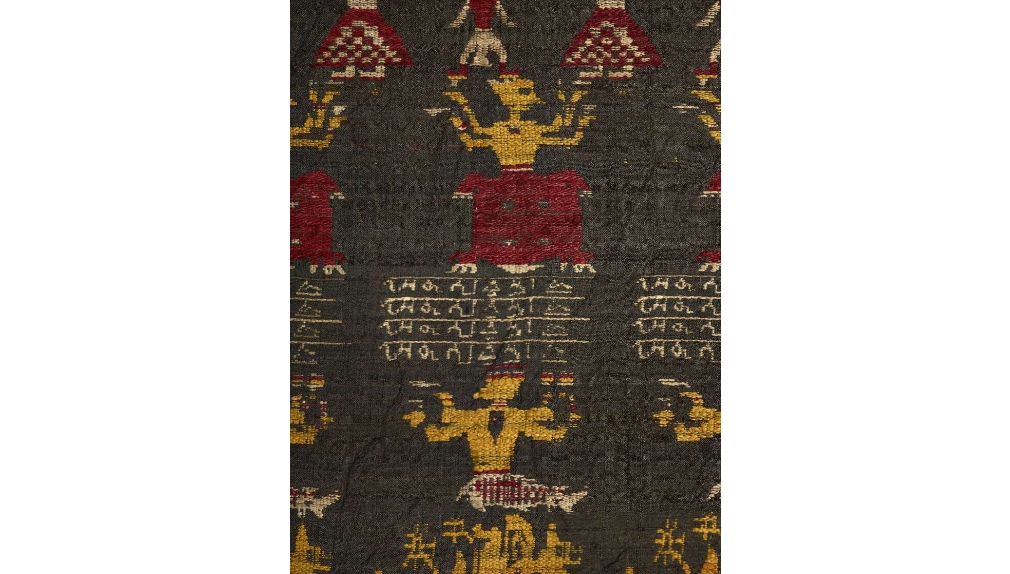
Updated: 6 days ago
The Centre for Indian Knowledge Systems (CIKS) at IIT Guwahati held a five-day workshop on Tankri, a historical script of the Western Himalaya, introducing participants to its history, reading practice and the interpretation of inscriptions.
Published 31 Oct 2026 | Category Workshops | Office Centre for Indian Knowledge Systems

The Centre for Indian Knowledge Systems (CIKS), IIT Guwahati, organised a five-day hybrid workshop on Tankri (Takri) from 26 to 30 October 2026. The workshop, titled “History, Script, Reading and Epigraphic Interpretation”, was held at the Seminar Room, Centre for Educational Technology. Participants joined both in person and online, which allowed wider engagement with the region’s manuscript and inscriptional traditions.
Why Tankri Matters
Tankri was historically used for administrative records, land deeds, temple accounts, correspondence and inscriptions across the hill regions of Himachal Pradesh. As a descendant of the Sharada script family, it preserves valuable historical, linguistic and cultural knowledge.
Much of this heritage remains inaccessible today because the number of trained readers is declining. This makes efforts towards script revival increasingly important.
Workshop Schedule
The first day covered the origin and history of Tankri and its place among the scripts of the Western Himalaya. It then examined the relationship between Tankri, Sharada and Devanagari, and the script’s link with the Pahari dialects. The third day covered the letters and signs of Tankri and its regional variations, with writing and reading practice. The fourth day introduced inscriptions in Tankri and related scripts and methods for reading them. The final day took up contemporary issues around the script, followed by a recap of the workshop.
A major highlight of the workshop was the participation of Mr Yatin Pandit, a noted Tankri palaeographer and epigraphist from Kullu, Himachal Pradesh. Over five days, he guided participants through the history, structure and practical use of the script, combining scholarly insight with hands-on learning.
Mr Pandit is the founder and lead researcher of the Himalayan Script Revival Initiative and has spent more than a decade documenting and studying the script across the Western Himalaya. His work includes reading and translating more than 100 temple and deity account books, documenting inscriptions on copper plates, temple bells and household metalware, and teaching Tankri to nearly 800 students. He is also a recipient of the Thakur Maulu Ram Pahari Bhasha National Award.
Through lectures, demonstrations and practical exercises, participants explored the origins of Tankri and its regional forms. The workshop also introduced palaeographic and epigraphic methods, encouraging direct engagement with manuscripts and inscriptions as primary historical sources.
Prof Devendra Jalihal, Director, IIT Guwahati, delivered the inaugural address. Also present were Prof Uday S. Dixit, Head, CIKS; Prof Shakuntala Mahanta, Head, Department of Humanities and Social Sciences; and Prof Sukanya Sharma, organiser of the workshop.
Prof Bidisha Som delivered the valedictory address. The closing session highlighted the value of preserving regional script traditions and encouraged interdisciplinary engagement among scholars of linguistics, history, cultural studies and Indian Knowledge Systems.
The workshop was organised by Prof Sukanya Sharma (Main Coordinator), with Vivek Singh (Organiser), Mukesh CP (Co-Organiser) and Eshan Harit (Translator).


Comments